
Quick Summary
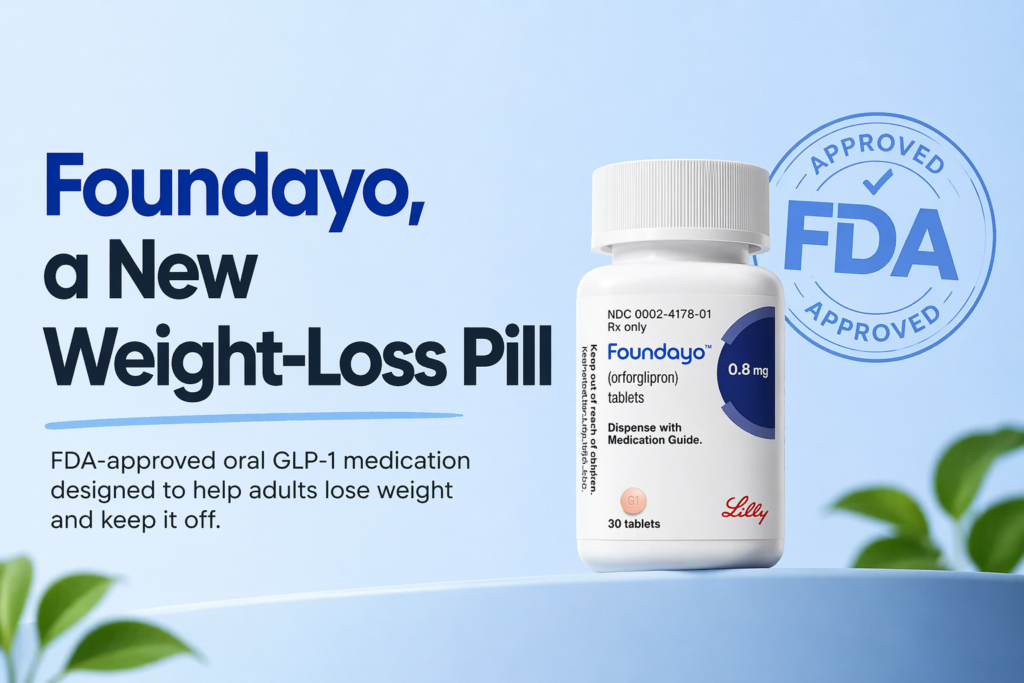
- Foundayo (orforglipron) is a new FDA-approved pill for adults living with obesity or extra weight tied to health problems.
- It’s the first GLP-1 pill that isn’t a peptide, and it works like the injectable drugs many people already know.
- The highest dose led to about 12% average weight loss in a large trial.
- You can take it anytime, with or without a meal.
- Upset stomach, nausea, and other GI troubles are common.
- Certain thyroid, pancreas, and stomach conditions make this drug unsafe.
Follow Our: Is Ozempic available in a pill?
1. What the Research Says
Foundayo (orforglipron), an oral weight-loss pill by Eli Lilly, is becoming available. Foundayo cleared the FDA in April 2026. It’s for adults with obesity or for people who live with both excess weight and a weight-linked condition.
Its evidence comes from two large trials that ran for 72 weeks each. The first, ATTAIN-1, enrolled more than 3,000 adults. The highest Foundayo dose led to an average drop of 27.3 pounds (12.4%), while the placebo group barely moved. Waist size fell, triglycerides and non-HDL cholesterol dipped, and blood pressure eased a bit.
ATTAIN-2 focused on people with Type 2 diabetes. More than 1,600 adults took part, and weight loss followed a clear dose pattern—more drug, more loss—compared with placebo.
Foundayo doesn’t bring quite the same weight-loss numbers as injectable GLP-1 drugs like Wegovy or Zepbound, which land closer to 15–21%. Still, a once-a-day pill is a different kind of convenience.
2. How the Body Works: Mechanism Explained Simply
GLP-1 drugs mimic a hormone that nudges your appetite and digestion in a calmer direction. Foundayo taps into that same pathway.
It slows how quickly food leaves your stomach. It dials down hunger. It helps the body handle blood sugar in a steadier way. With time, many people naturally eat less because they feel full earlier and stay full longer.
This version is a non-peptide GLP-1, which means the molecule can survive the stomach better than some older oral versions.
Follow Our : Does Ozempic Cause Bone Density Loss
3. Benefits (With Evidence Levels)
Strong evidence:
Foundayo helped people lose meaningful weight over a year and a half in two well-run randomized trials. The ATTAIN-1 study also showed shifts in cholesterol, triglycerides, waist measurements, and systolic blood pressure.
Moderate evidence:
People who avoid injections might find this pill more doable day-to-day, and the lack of timing rules makes it easier to weave into real life.
Limited evidence:
Researchers are exploring whether the drug might help with things like sleep apnea or knee osteoarthritis pain. Those studies are early, so nothing is settled.
Follow Our: The Ozempic Birth Control Glitch: Why “Surprise Pregnancies” Are Hitting the GLP-1 Corridor
4. Risks, Side Effects, and Safety Warnings
GI problems show up a lot—nausea, constipation, diarrhea, vomiting, abdominal pain, belching, heartburn, indigestion. Some people report fatigue, headaches, or hair loss.
The more serious warnings include a risk of thyroid tumors, including medullary thyroid carcinoma. People with MEN2 or a known family history of those tumors shouldn’t use it. Pancreatitis is another concern. Problems with stomach emptying can get worse. Dehydration can cause kidney issues. The drug can raise the chance of low blood sugar when paired with insulin or sulfonylureas. Allergic reactions, changes in vision for people with diabetes, and certain anesthesia-related risks also appear in the prescribing material.
Pregnancy is tricky. Safety isn’t clear, and the drug reduces the strength of oral birth control for about 30 days after each dose increase. A pregnancy registry exists for anyone who’s exposed during pregnancy.
5. Who Should Avoid This
Foundayo isn’t meant for:
- People with a personal or family history of medullary thyroid carcinoma
- Anyone with MEN2
- People who once had a serious reaction to orforglipron
- Children
- Anyone already taking another GLP-1 drug
- People with certain severe stomach or pancreas issues
6. Expert Commentary / Clinical Perspective
Clinicians who follow obesity medicine closely describe Foundayo as the start of a new chapter: GLP-1-style results from a simple daily pill.
That said, switching from injectable GLP-1s to this pill doesn’t seem to be an equal trade. In Lilly’s data, people moving from Wegovy injections to Foundayo regained about 2 pounds, and those switching from Zepbound regained roughly 11 pounds. It’s early data, but it suggests the drugs don’t behave identically.
7. Practical Advice for Readers
Think of medications like this as one part of a wider plan. Food patterns, movement, stress, sleep, support—these pieces still matter.
If your stomach gets testy with GLP-1 drugs, you’re not alone. Those symptoms often show up early. People who use oral birth control may need to ask their clinician what backup method fits their life best.
For folks with thyroid disease, pancreas troubles, or slow stomach emptying, a careful conversation with a health professional is worth it. And if you’ve got surgery coming up, your care team will need a rundown of everything you’re taking, including this pill.
8. Limitations of the Research
Both main trials were industry-funded. That’s common in drug development, but it’s worth naming.
The studies lasted 72 weeks. Anything beyond that is still being watched. Real-world data from older adults, Indigenous communities, people with several chronic conditions, and other under-represented groups will take time.
Access may be uneven early on because of supply and insurance hurdles.
9. Conclusion
Foundayo brings a new option to people dealing with obesity or extra weight tied to health problems. The pill shows clear weight-loss results and a simpler daily routine than injections. It also comes with real side effects and isn’t appropriate for everyone.
Talking through the risks and expectations with a clinician who knows your full health picture is still the safest way to figure out whether it’s a fit.
Follow Our: Is Ozempic available in a pill?
Medical Disclaimer:
All content found on this website, including text, images, or other formats, was created for informational purposes only. The content is not intended to be a substitute for professional medical advice, diagnosis, or treatment. Always seek the advice of your physician or other qualified health provider with any questions you may have regarding a medical condition. Never disregard professional medical advice or delay in seeking it because of something you have read on this website.
🔗 Reference
- CNN Health Coverage
- Eli Lilly Official Website:
- Lilly Press Release (PR Newswire, April 1, 2026)
- Forbes Article on Foundayo
- ATTAIN-1: Orforglipron Achieves Up to 12% Weight Loss
- A Study of Orforglipron in Adult Participants With Obesity or Overweight and Type 2 Diabetes (ATTAIN-2)